

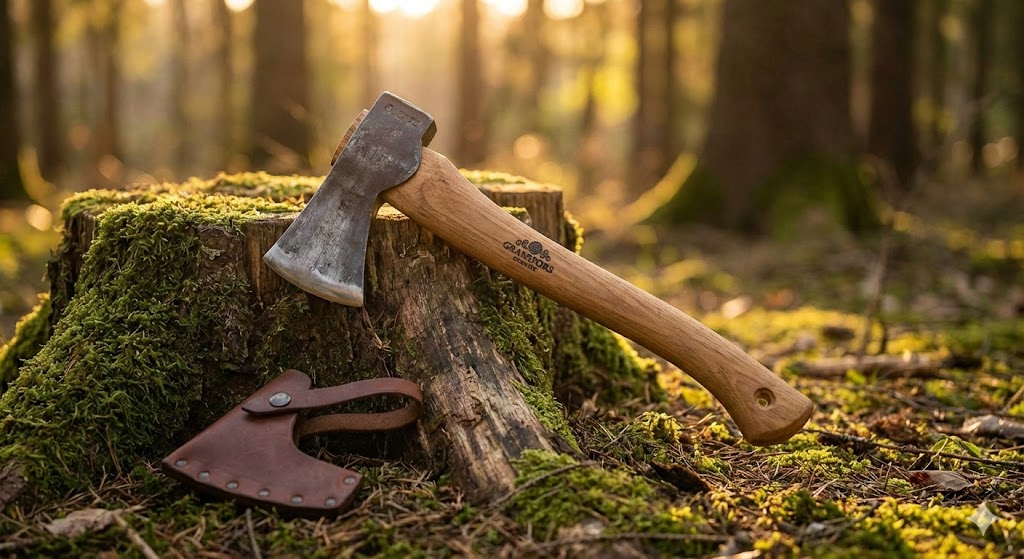
Ever wonder how to maintain your Gransfors Bruk Axe for a lifetime of service?
An axe crafted by Gransfors Bruk is more than just a tool; it is a tangible piece of functional art and an investment in centuries of Swedish craftsmanship. When you hold one, you aren't just holding steel and wood; you are holding the responsibility of maintaining it.
With proper care, a high-quality forged axe is not just a purchase for today—it is an heirloom to be passed down through generations. Neglect it, and nature will reclaim it. Care for it, and it will serve you faithfully for a lifetime.
This guide covers the essential rituals required to keep your axe sharp, safe, and ready for the solemn work of the woods.

1. Caring for the Steel Head
High-quality axe heads, like those from Gransfors, are forged from specialized carbon steel. This material is incredibly tough and holds a superior edge, but unlike modern stainless steel, it contains iron and is susceptible to oxidation (rust) if neglected. Moisture is the relentless enemy of your axe head.
Maintenance Rituals:
-
Clean and Dry Immediately: The easiest way to ruin an axe is to put it away wet. After every use, wipe the axe head clean of dirt, tree sap, or gunk. If you’ve been working in snow or rain, ensure the metal is bone-dry before putting it back in its sheath. Moisture trapped in leather will accelerate rusting.
-
Oil is Armor: Regularly apply a light protective coat to the steel. A dedicated axe paste wax, camellia oil, or even standard 3-in-1 oil works wonders. This creates a barrier against ambient moisture. Over time, a well-oiled axe will develop a beautiful dark patina—this is good. Active red rust is bad.
-
Smart Storage: Never store your axe in a damp shed, a leaky barn, or leave it resting directly on the ground where earth moisture can attack the metal. A dry environment ensures longevity.

2. Maintaining the Hickory Handle
A Gransfors handle is crafted from superior American hickory, chosen for its tremendous strength and flexibility. Remember that the wooden handle is a "living" component. It breathes, expands, and contracts with changes in humidity and temperature. These fluctuations can affect how securely it fits into the axe head.
Maintenance Rituals:
-
Feed the Wood: Wood that dries out becomes brittle and prone to cracking under impact. You must feed it to keep it resilient. Boiled linseed oil is the gold standard. Apply thin coats regularly, letting the wood drink it in, then wiping off the excess. The old adage applies: "Once a day for a week, once a week for a month, once a month for a year, and once a year for a lifetime."
-
Avoid Climate Shock: Never store your axe next to a radiator, wood stove, or inside a hot vehicle in summer. Excessive dry heat will rapidly shrink the wood, causing the head to become dangerously loose.
-
The Pre-Swing Safety Check: Before every single swing, visually inspect the "eye" (where the handle passes through the head). Ensure there are no gaps and that the fit is tight and secure. A loose head is a severe safety hazard.

3. The Poll: The Golden Rule
The "poll" is the flat, back end of the axe head. It looks like a hammer face, but on a standard forest or felling axe, it absolutely is not a hammer.
Unless you are using a specialized "splitting maul" or a carpenter’s axe specifically designed for driving nails, neverstrike the poll with a sledgehammer or use the poll to pound steel wedges.
Why? The "eye" of a standard axe is designed only to hold the handle. The steel walls around the eye are relatively thin. If you strike the poll with hard force, you can deform the eye (mushrooming the metal), which will permanently loosen the handle, or worse, crack the forged steel head entirely. If you need to hammer steel wedges, use a sledgehammer.

4. Sharpening: The Basics
A dull axe is a dangerous axe. It glances off wood rather than biting into it, increasing the chance of deflection towards your legs or feet. Sharpening is a meditative, multi-step process that depends on the current condition of your edge.
-
Step 1: Filing (For Damage): If your edge has struck a rock and has visible nicks or chips, you need to remove metal to reset the edge. Clamp the axe securely to a workbench. Use a flat metal bastard file to remove the damage. Crucially, file the same amount of material from both sides to maintain the blade's symmetry and the original convex shape of the Gransfors bit.
-
Step 2: The Stone (For Routine Maintenance): If the edge is just dull from normal use, skip the file. Use a coarse/fine puck-style stone (like the Gransfors Ceramic Stone).
-
Lubrication: Use water or honing oil to float metal particles away and keep the stone cutting effectively.
-
Technique: Use a circular motion along the bevel, working from heel to toe. Gransfors axes have a convex bevel (like a pumpkin seed shape), so you must rock the stone slightly as you work to maintain that curve. Do not sharpen it flat like a knife.
-
Balance: Count your strokes. Sharpen both sides equally to keep the cutting edge perfectly centered.
-

5. Honing and Polishing
Once you have sharpened with the stone, you may feel a "feather edge" or "burr" on one side—a tiny, thin strip of waste metal bent over the very tip of the blade. This needs to be removed for a true, lasting razor finish.
The Finishing Touch:
-
Stropping: Use a leather strop (an old thick leather belt works in a pinch) impregnated with a little polishing compound. Secure the strop flat.
-
The Technique: Run the axe edge backward along the leather—spine first, pulling away from the cutting edge—applying moderate pressure. Flip the axe and do the other side. This polishes the steel to a mirror finish and breaks off the microscopic burr.
-
The Result: A well-honed axe should slice through a piece of standard printer paper cleanly with no tearing. A polished edge also reduces friction when chopping, allowing deeper cuts.

6. When (and How) to Replace a Handle
Even with the best care, hickory handles can break due to an overstrike, or simply wear out over decades of heavy use. Gransfors axes are designed to be re-handled.
-
Remove the Old: Saw off the broken handle close to the head. Secure the head in a vise and drill out the remaining wood core from the eye, being careful not to drill into the metal itself.
-
Fit the New: Always use a genuine manufacturer replacement handle designed for your specific axe model to ensure the correct eye size. Ensure the new wood handle is extremely dry before fitting; if it holds moisture, it will shrink later and the head will loosen.
-
Wedge it Home: Drive the main wooden wedge into the kerf (slit) of the new handle, applying wood glue for extra security. Hammer it until it will go no further. Saw off the excess.
-
The Lock: Finish by driving the small metal cross-wedge diagonally across the wooden wedge. This locks the wood outwards against all sides of the axe eye.
Note: Re-handling an axe is a skilled task. If you are unsure about the process, it is worth having a professional carry out the repair to ensure safety.
By following these steps, your axe will remain a reliable partner in the woods for years to come, eventually becoming a story you pass on to the next generation.
Share: